
Rethinking mobility as a system — not a sector
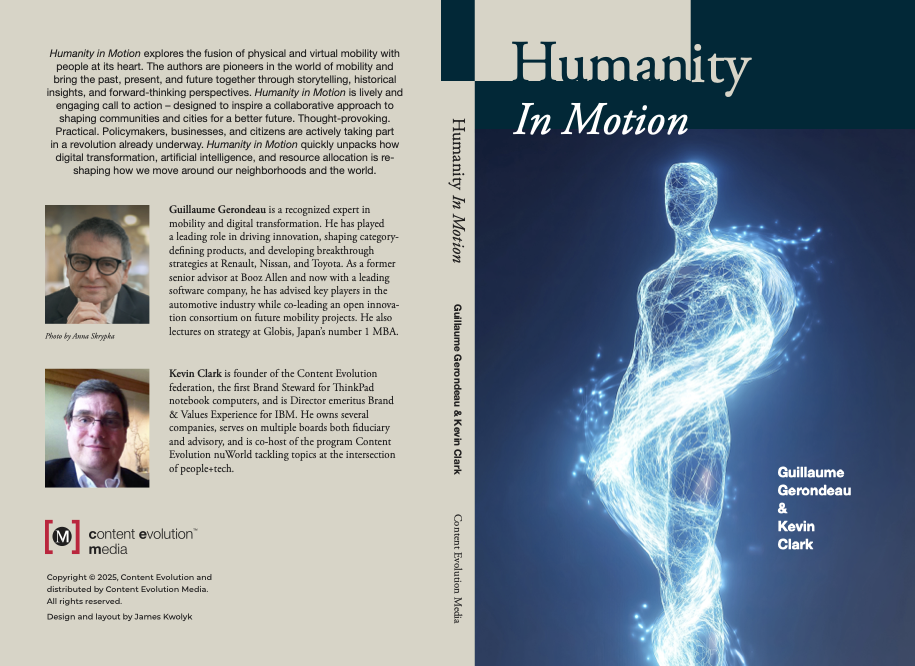
Humanity in Motion is not a book about cars, autonomous vehicles, or new technologies taken in isolation.
It is a book about how our relationship with mobility is being fundamentally reshaped, at the intersection of physical movement, digital presence, time use, work, cities, and social organization.
Written after decades spent inside global automotive, technology, and public ecosystems, the book starts from a simple observation:
mobility has become systemic, while most decisions are still made in silos.
Beyond vehicles, beyond technology
Electric vehicles, autonomy, AI, shared mobility and virtual tools are often discussed as separate revolutions.
Humanity in Motion argues the opposite: their real impact only emerges when they are designed and governed together, as parts of a broader mobility system serving people and society.
The book questions prevailing assumptions:
- that progress in mobility is mainly technological,
- that affordability comes from simplification and cost cutting,
- that digital tools substitute physical movement,
- or that partnerships succeed once contracts are signed.
Instead, it shows how value is created — or destroyed — at the system level: through integration, coherence, and human-centered design.
The core message: collaboration replaces silos
The final part of Humanity in Motion focuses on what is now the hardest challenge:
building collaborative, cross-silo approaches between industries, cities, regulators, and users.
Many mobility initiatives fail not because technology is immature, but because:
- actors optimize their own piece of the system,
- governance is disconnected from real use cases,
- and decision-making ignores second-order effects on time, behavior, and quality of life.
The book proposes a different approach:
one where mobility is treated as a shared responsibility, combining physical and virtual solutions, public and private actors, efficiency and dignity.
Who this book is for
Humanity in Motion is written for:
- decision-makers shaping mobility strategies,
- public authorities and urban actors,
- industry leaders navigating partnerships and transformation,
- and anyone convinced that mobility is no longer just about moving faster, but about living better.
It does not offer recipes or ready-made solutions.
It offers a framework to think, decide, and collaborate differently — before choices become irreversible.
Why Humanity in Motion
Because the mobility transition is not only about new vehicles or emissions targets.
It is about how we organize movement, time, and interaction in the 21st century.
And that requires stepping back, connecting the dots, and abandoning siloed thinking — before technology runs ahead of collective purpose.
The book is available on Amazon paperback or Kindle versions…