Successful Innovation and Trend Forecasting: Defying the Consensus and Making a Difference
I recently had the opportunity to exchange with a team responsible for product and innovation management at a major corporation. Introduced as the “crazy guy” whose ideas and forecasts defied expectations but generally became reality, I was asked to share insights from my past in innovation management.
In this article, I’ll try to articulate some of the principles and tools that, in my opinion, underpin successful innovation and effective trend anticipation.
Throughout my career, my teams and I have overseen innovation projects from their inception to market introduction. Among the notable endeavors are Renault Clio I, car of the year and leader in sales, Renault’s safety policy, Nissan’s SUV lineup, and the integration of hybrid technology into Toyota’s European product range.
Our conviction was we had to push further into Clio’s premium features even if doubts once prevailed over whether small cars could also be premium.
We thought safety could significantly influence purchase decisions and brand value and Renault should differentiate in this area,
We anticipated that SUVs could gain traction in traditional markets like China.
And we fought to massively invest in hybrid production capacity and product line-up for Toyota in Europe at the expense of diesel even if there was skepticism or even incredulity about Europeans embracing hybrid technology instead of diesel.
What’s intriguing is that these endeavors were born from ideas that many believed were destined to fail.
“Truths are more likely to have been discovered by one man than by a nation.” René Descartes
It’s vital to challenge conventional wisdom. If you think of an unconventional idea, validate it personally. People tend to parrot what they’ve heard, reinforcing preconceived beliefs especially in an homogeneous business environment.
While not all commonly held ideas are misguided, don’t hesitate to investigate if you have doubts on what everyone repeats. You might stumble upon enlightening surprises in your search.
For instance, our analysis revealed that affluent customers were often urban and empty-nesters, hinting at the emergence of a compact premium market. We found safety wasn’t a decisive factor in purchases, as no car maker -except one- tried to differentiate -probably looking superficially at the same research- but remained a strong potent unmet need highly correlated with quality. Our research foresaw that after their initial purchase, Chinese consumers would seek distinctive lifestyle vehicles. Moreover, we compared the anticipated trajectory of hybrid and diesel costs against their respective values especially rising environmental concerns. We then identified a convergence point around 2015 as a tipping point where hybrid competitiveness would start to impose itself and diesel sales to fade.
Strikingly, presenting evidence, results of our researches and quantifiable data often proved insufficient to most.
We had to rely on visionary leaders who believed in our vision and made the right decisions. Jacques Cheinisse, Renault’s former head of product planning was one of them, Louis Schweitzer, the CEO of Renault embraced our safety strategy, Katsumi Nakamura, Nissan’s China head supported the Qashqai’s entry, and Tadashi Arashima, Toyota Europe’s CEO propelled hybrid acceleration with the progressive abandon of diesel on Toyota’s line up in Europe.
In today’s rapidly evolving landscape, it’s time to revisit fundamentals: continuously learn, adapt to changing paradigms, embrace diverse perspectives, prioritize customer needs, and courageously take measured risks.
Post our engaging discussion, and inspired by the rich exchange, I formulated a set of 10 principles drawn from my experience. These principles can guide product, service, and project managers in nurturing successful innovations and assessing their potential success. I do not pretend that they are the only ones or that they will guarantee success but I am convinced that applying them will increase the chance of anticipating correctly and innovating the relevant service at the right time.
10 principles to make a difference
- Value Measurement: Gauge the innovation’s value for your target audience. While costs are meticulously tracked, the value is often overlooked. Employ techniques to quantify functional, emotional, and brand-related value. Improve these techniques over time.
- Conflict Creation: Innovation thrives on the clash of ideas. Foster an environment for creative conflict to thrive, often arising from diverse perspectives. Absence of conflict may indicate overlooked challengesespecially in a time where borders between industries are becoming blurred. Don’t avoid conflict -as long as it is a creative one of course.
- 80-20 Rule: Strive for 80% of the value at 20% of the cost. Mere equilibrium won’t suffice; potent innovations differentiate on a clear advantage on value for money for their intended customers.
- Timeliness: Plot cost-value curves for innovation candidates. Launch just before these curves intersect. Launching too early risks being ahead of the curve, and launching late surrenders leadership.
- Consistency: Maintain consistency in development by involving all stakeholders from market analysis to sales at each point of the development. Avoid handover with lack of accountability. Evaluate each contributors’ consistency across milestones and across all contributors at each milestone. Begin with a shared customer elevator pitch and refine it over time.
- Continuous Improvement: Systemize project evaluation at milestones using PDCA (Plan-Do-Check-Act). Cultivate a culture of constant enhancement via shared tools and continuous improvement practices. Use those milestones to improve your tools and processes. Learn from mistakes observed at each milestone. Formalize you processes and their progresses.
- Dual Focus: Balance short-term projects with future-oriented innovation. Foster a comprehensive portfolio and roadmap to guide innovation.
- Regulation Mitigation: Regulations may influence timing, but they won’t deter meaningful innovations if they don’t follow science. Consider regulations but don’t hinge success on them.
- Probability Thinking: Embrace scenario planning; envision multiple outcomes. View innovation investments akin to stock options—a small expense today could avert significant future setbacks or allow huge return in the future.
- Innovation Champions: Designate innovation owners and delegate responsibility. In a complex world, where markets and technologies evolve rapidly, decentralized innovation management is imperative.
Bonus Principle: Passionate individuals catalyze robust innovations. Navigate doubt, discussion, execution, and speed with passion, staying true to the core concept.
I was fortunate enough to work with passionate teams encompassing planners, designers, engineers, and marketers. We kept challenging one another, driving most projects to success.
These principles aren’t a panacea but stem from my experiences. While they may align with existing literature, their application often remains elusive.
Moreover, still today, some crucial future trends in mobility remain overlooked by major players, repeating past mistakes.
Forecasting trends and nurturing innovation holds inherent risks, yet adhering to fundamental principles mitigates these risks.
Innovation is a mindset and a long journey—one navigated by those who dare to question, challenge, and envision beyond the present. As the world shifts, future successful innovators and trend forecasters who follows some basic principles will increase their chance to improve the world without having to rely on innovation gurus or wizards.
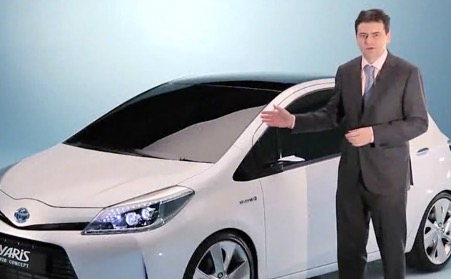
Picture illustrates GG explaining Yaris Hybrid concept in January 2011 when Diesel sales in Europe were at their peak on a TME video. The production model was launched in 2012 and overachieved all sales forecasts. Thanks TME for approval to use the image.